
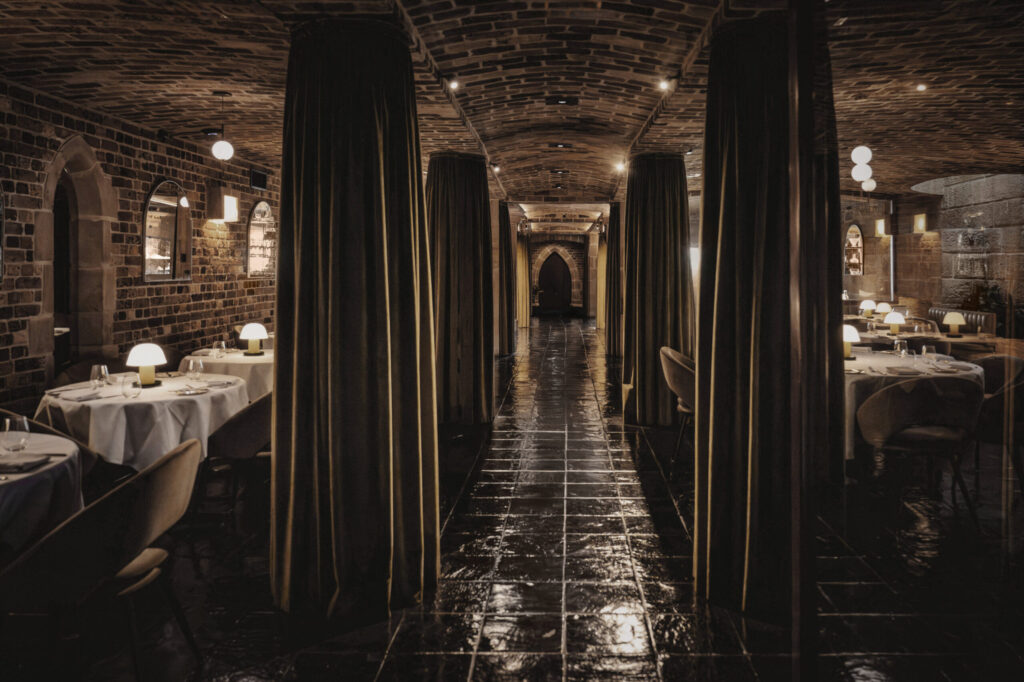
A new restaurant and bar has opened in Glebe, with Darling Glebe taking over one of Sydney’s most historically charged dining rooms and returning it to what it has always done best: pour serious drinks and give people a reason to stay.
The venue occupies the former Darling Mills site beneath St John’s Church, a sandstone space carved by hand over more than a decade. Long before martinis hit the bar, the room was shaped by architect Edmund Blackett, dentist-turned-visionary Dr Alfred Adey, Roman stonemason Sergio Ferrari, and artist Anne Dybka OAM. Together, they created a subterranean dining room that helped define Sydney’s early farm-to-table movement when Darling Mills opened in 1989.
Chef restaurateur Jeff Schroeter discovered the space decades later and first reopened it as Beckett’s in 2020. In 2026, he returned with Darling Glebe. “When the landlord messaged me ‘welcome home,’ it felt like the right time to bring the room back to what it does naturally,” said Schroeter.
The bar leads the experience. Darling Glebe’s Ferrari Martini Lounge is named not for speed, but for Sergio Ferrari, the stonemason who carved the arches and vaults. The drinks list is unapologetically martini-forward, built around balance, savoury depth, and structure rather than showmanship.
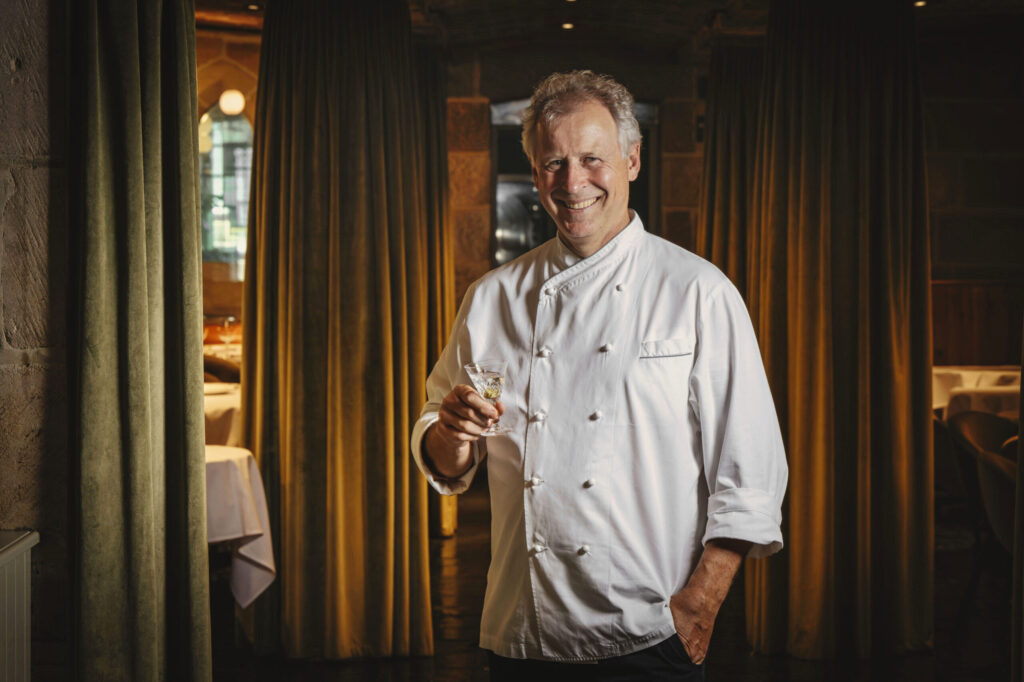
The Chef’s Martini anchors the list – Plymouth gin and Dolin dry vermouth in a deliberately wetter ratio, finished with olive brine and three olives. “It’s a revival of the early martini, before dryness became a dare,” said Schroeter. “Balance matters more than bravado.”
Classic variations follow: Gibson, Gimlet, Vesper, Martinez and Tuxedo, alongside fully customisable martinis and a mini format named “Our Little Darlings” for those pacing themselves.
Beyond martinis, the cocktail list leans nostalgic and textural. A Sgroppino blends vodka, rotating sorbet, and prosecco. Petal and Cane pairs white rum with peach and jasmine. Fig–ure Me Out layers cognac, amaretto, and spiced fig, while Sunset Serenade brings rum, chocolate and cherry together. A considered non-alcoholic section mirrors the complexity of the main list rather than sidelining it.
The atmosphere is deliberately restrained. Lighting is low, glassware is thin, and staff wear vintage Hermès Papillon bow ties, chosen nightly by chance. “They’re a wink,” Schroeter said. “Something that makes people smile before the menu even arrives.”
Food plays a supporting role to the bar, drawing on classical French technique with a European brasserie sensibility. Dishes are designed to hold their own alongside strong drinks, not compete with them, keeping the focus firmly on conversation, pace and repeat rounds.
Darling Glebe is now open – a bar committed to structure, history and well-served drinks, in a room that has always known how to tell a story.