
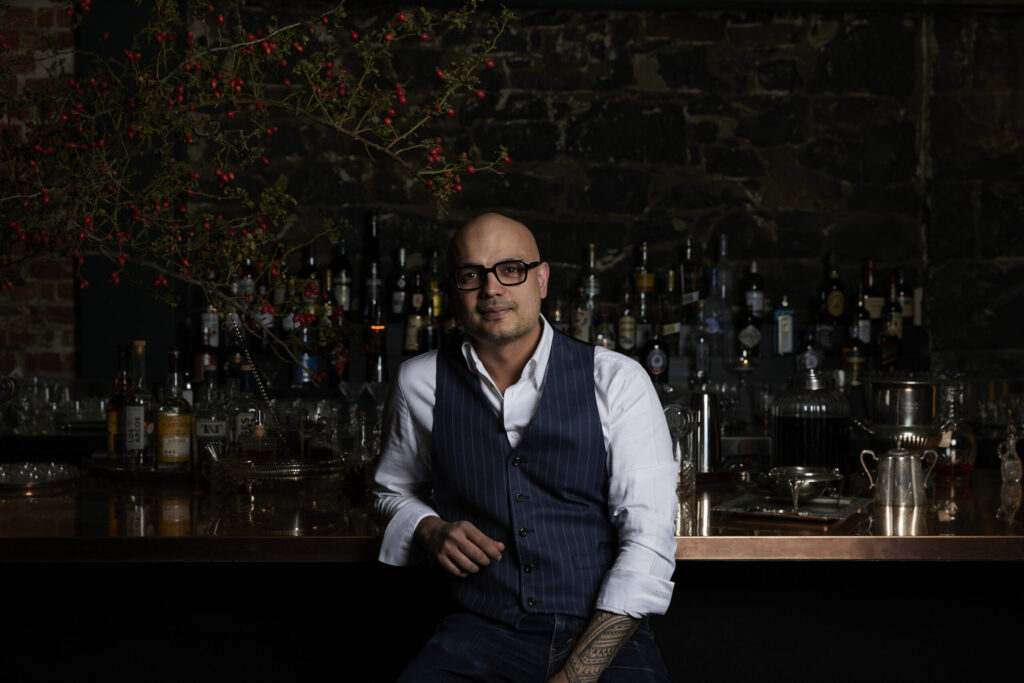
You’ve worked across Mumbai, Beijing, Guiyang and the Philippines before landing in Melbourne. What moments from that global journey shaped the operator you are today?
Working in different cities, with completely different cultures/styles/behaviour of people, it helped me understand them better and how to work with them. Philippines taught me a lot about service, the way people engage with you is just mind blowing. That’s what hospitality is all about, the relationships.
What drew you from five-star hotels to running your own venues?
Was there a tipping point where you realised you wanted to build something personal rather than work inside a big hotel machine?
During my last few years in hotels as a Director of Food & Beverage, I was spending way too much time in meetings, preparing reports etc and that was enough for me. I reached the highest point I wanted to reach in hotels and eventually it was time to go back to the roots. I like being on the floor and see first-hand what the customer wants, it’s much easier to create a decent product that way. All these meetings & reports, they go on forever and you’re no wiser.
Mill Place Merchants has a strong sense of story and era.
What was the spark that led you to create a Prohibition-inspired speakeasy hidden behind a dressing room?
When working on a concept, I generally work backwards. Rather that creating a concept and then looking for a place, once an opportunity presents, I work in reverse. When Mill Place was shown to me, I must have gone in and out about 30 times, when it occurred to me, that the place looked like a collector’s basement, a trader who was travelling around the world for years and collecting bits and pieces. I decided to make it a bar as I wanted to make the place feel like you’re inviting friends’ home, and while you’re cooking or making drinks, guests are sitting on the other side of the kitchen or lounge and enjoying themselves. Nothing in the venue is fake, everything is original/real and collected from various sources and everything has a story to tell.
MPM is what I like to call “a live venue.” Everything keeps changing; whenever we find something amazing, we get rid of something and add another piece of history.
Flinders Lane was the fashion capital of Melbourne for almost 150 years, maybe more. When we started the process of creating a sense of differentiation between the outside and the inside, we initially thought of doing something really modern, but looking at the building and history of the everything around us, we worked out that a classic dressing room, would be a perfect fit for this area. So far it has been well received, so it must have worked.
You draw inspiration from cocktail legends like Victor Bergeron Jr, Charles H. Baker Jr and Harry MacElhone.
What about their work speaks to you, and how do you reinterpret their recipes without turning the bar into a museum?
MPM is all about going back to the basics. We wanted to show people what cocktails are supposed to be and no better way than to showcase the true foundations. Like mother sauces such as mayonnaise, hollandaise etc., the cocktails from these legends are what people use a base to create new cocktails, that’s the learning that we live by and so far, it hasn’t disappointed our customers.
Live jazz is a big part of the Mill Place Merchants experience.
Why was music essential to the identity of the bar?
The venue is not setup like a bar; it is more like an extension to a merchant or trader’s home. We got hold of a pianola from 1920’s as part of the decor. One of our good friends, saw it during our soft launch and recommended we invite a pianist to come play once a week. This led to us trying out a few times and the reception was incredible and we stuck with it. We don’t use any speakers, it’s completely acoustic, which makes it extremely residential in style.
Switching gears: Cuff Café.
Why pair a speakeasy with a brunch venue? What connects these two seemingly different worlds?
Both buildings were owned by the same family. While I was at Cuff for 7 years, I got approached by them if I wanted to do something at Mill Place and once, I saw it, I immediately had a basic sense of what I wanted to do there.
Quality and service are clearly core values for you.
What does “uncompromising” actually look like day-to-day – from staff training to sourcing?
For me it’s always about 2 things, getting the basics right and keeping things consistent. Everything we do, these two are at the core. We are not selling food & beverage, we are providing hospitality, so it’s best to keep it less robotic and more human.
You’ve built two venues with distinct personalities.
How do you juggle creativity with the brutal realities of running hospitality businesses?
Hospitality is not a job, it’s a profession. Passion & resilience are in the centre of what we do. Without them, I would have never have made it in this industry. There is never a day that goes by, when you hit the wall, but eventually as the day goes by or another, you realise that this is my calling. I figured out many years ago, that my purpose in life is to do this.
Hospitality is shifting fast – menus, expectations, staffing, culture.
What future trends do you see shaping Melbourne’s dining and drinking scene?
Simplifying concepts is the way. Focusing on few dishes or drinks and doing them properly, day in day out, is the recipe. Simplify the product, service, ambiance etc. and it’s easier to manage. From my personal point of view authenticity, there is a reason why certain cuisines or style of drink have been prevalent for hundreds of years. Don’t fix it, replicate it.
For you personally, what does success look like in the next few years?
More venues? More storytelling? Or something completely unexpected?
I’m a genuine person and everything I create, I like to make sure that we keep this at the forefront. I don’t care if we don’t make a lot of money, as long as I can build something, that can stay relevant for a decent number of years, I’ll be satisfied. It’s already incredibly hard to generate huge bottom line, with the costs of doing the business off the charts these days. We are the custodians of our industry; we try to educate people about what hospitality is all about.