
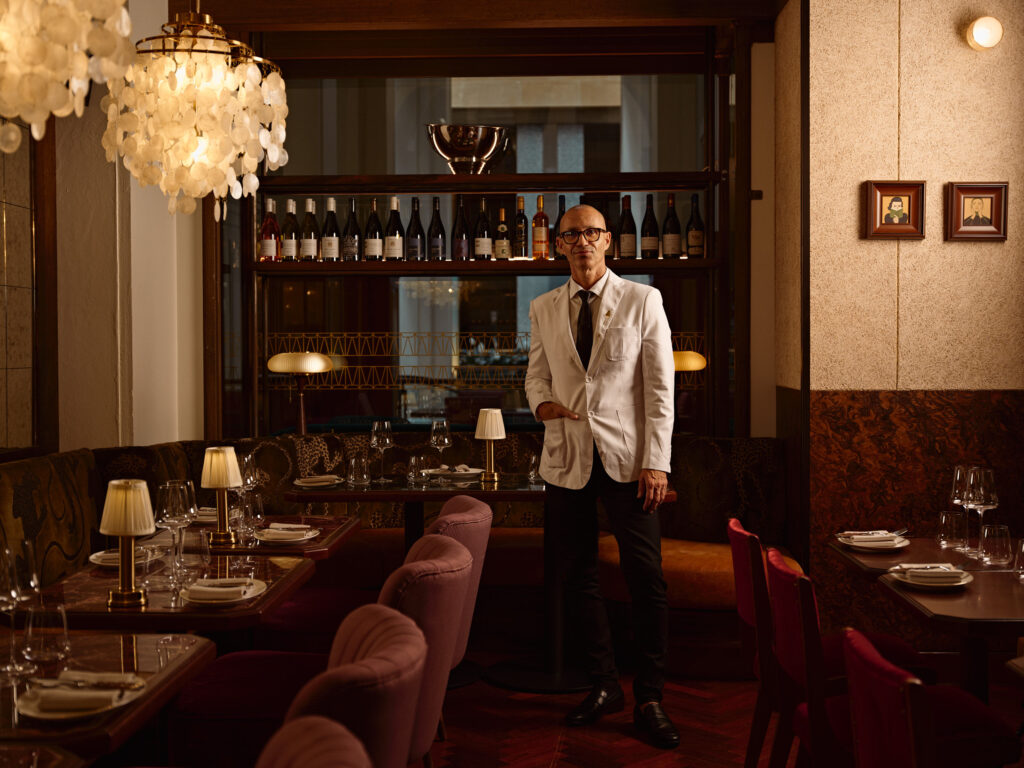
Frank Dilernia has built the Tapavino Group the old-school way – graft first, polish later. From launching Tapavino as Australia’s first dedicated sherry bar to growing a tight, Spanish-leaning mini-empire across Sydney, his playbook has always been about flavour with intent and operations that actually work on a slammed Saturday night. In this chat, Frank gets into why spicy agave drinks are dominating orders, and what happens when pretty-but-painful cocktail menus meet real-world service pressure. We also dig into the messy reality of opening venues in Sydney (red tape, budget blowouts, zero glamour), the shift from solo operator to group owner, and the hard-earned lessons on cash flow, risk, and building menus that keep staff sane and guests moving.
What forced the shift away from prep-heavy cocktails at Epula – service speed, staff fatigue, or lost sales on busy nights? It was a combination of all three, really.
“Our original menu featured intricate, labour-intensive cocktails that required a lot of fresh prep, muddling, infusing, and garnishing on the fly, which shone in quieter services but became a bottleneck during peak times. Staff fatigue kicked in on long shifts, leading to inconsistencies, and we noticed lost sales when waits dragged on busy nights. The overhaul was about streamlining without sacrificing quality, focusing on batchable elements and simpler builds to keep the team fresh and guests happy.”
What makes your spicy serve different from the flood of spicy margs across Australia?
“Most spicy margs in Australia rely on straightforward heat from jalapeños or habaneros mixed with classic lime and triple sec, but Ou La La flips the script with a layered, ‘summery’ profile. We blend premium tequila with Ancho Reyes for that subtle smoky chilli warmth, elderflower liqueur for a floral sweetness that cuts through the spice, fresh watermelon for juicy refreshment, and a touch of chilli around the rim for a building kick. It’s not just hot, it’s balanced, vibrant, as well as evoking a tropical twist on agave without the one-note burn you get from the standard crowd-pleasers.”
Why do you think spicy agave drinks are dominating orders right now?
“Spicy agave drinks, especially those built around tequila and mezcal, are exploding because consumer palates are evolving beyond the overly sweet profiles that dominated for years. People are craving bolder, more complex flavours, think smoke, heat, and fusions like jalapeño-infused margaritas, or savory twists that add depth.
Plus, social-media amplifies these trends, turning spicy margs into must-orders.”
How much faster is service now, realistically, since the menu overhaul?
“Realistically, we’ve shaved about 2-3 minutes per cocktail order on average, which adds up to 20-30% faster throughput during rushes. That might not sound huge, but on a service, it means turning tables quicker, fewer abandoned orders, and a smoother flow overall, guests get their drinks in under 5 minutes instead of 7-8, keeping the energy high.”
How did you personally get into hospitality, and when did you open your first venue?
“I fell into hospitality through a passion for wine and food, growing up in a family that loved gathering around big meals, as well as my uncle owning some of the most iconic Spanish restaurants in the late 70’s. I started in the industry late, started working in my late twenties in restaurants to pay the bills and surf. It hooked me, I loved working nights as I could go surfing during the day. Thankfully, I worked venues that I learned a lot from the owner-operators.”
“My first venue was Tapavino in Circular Quay, which opened in 2012 as Australia’s 1st sherry bar, it blew up, winning a best bar award in 2014.”
What was that early process really like – financing, fit-out, and all the messy bits no one glamorises?
“Brutal and exhilarating. Financing was the toughest, bootstrapping with personal savings between my business partner and myself. I took off 8 weeks to be the building manager of the project with little experience. Fit-out dragged on with delays from permits, turning a 3-month plan into 6, with dust, budget overruns, and late nights The messy bits? Endless red tape, hiring a team on a shoestring, and those first weeks of trial-and-error menus where half the dishes flopped. No glamour, just grit and learning that hospitality is 90% problem-solving.
“Thankfully, we didn’t get outside financing, which allowed us to control the direction of the business without being hamstrung by KPI’s.”
The Tapavino Group has grown into a multi-venue operation – what did that growth actually look like on the ground, and how different is the reality from the original vision?
“On the ground, growth was organic but chaotic, starting with Tapavino, we added Balcon by Tapavino in 2016 for a more upscale vibe, then Born opened 3 months later in the same year in Barangaroo. We went from 25 staff to 105 staff in the space of 6 months, all based around Spanish-inspired concepts. We opened Boque in 2018, but sold it in 2022, and finally Epula in late 2025 to branch into European fine dining.”
“There was also a gap in the market with Spanish wines, we began importing wines in 2013 under Barrica Wines, and at one stage pre-covid we were importing close to 500 different beverages and around 70,000 bottles per year, mainly servicing the venues. Thankfully, because Tapavino (the first venue) was a success and we had a few years under our belt, Banks would now back us in our expansion, and again, allow us to be sole owners of all the venues.”
“The growth was amazing, even with the delays and budget blowouts, and I couldn’t do it without the amazing staff who have been part of the history. I’ve been blessed and continue to be blessed to this very day.”
“The same ethos runs throughout all the venues, but each restaurant has been developed based on the location and the expected clientele that works or visits the area, so no 2 restaurants are the same.”
How big is the group now, and what changes operationally when you move from “a venue” to “a group”?
“We’re at 4 venues now: Tapavino, Balcon by Tapavino, Born by Tapavino, and Epula. Barrica Wines for importing, plus our online wine shop. Boque by Tapavino sold in 2022.”
“Operationally, the shift means less hands-on chaos per site but more structure – centralised purchasing for better deals, group-wide HR and training to maintain standards, and data-driven decisions like shared POS systems for inventory. You lose some of that scrappy, single-venue intimacy, but gain efficiency and the ability to cross-promote, which buffers against slow nights at one spot.”
“For those in important roles, I think it’s best to promote and allow people to grow within the company, rather than hiring from outside. Most of those in key roles have been with the company over 10 years.”
Frank, what’s one lesson you learned the hard way that you’d pass on to anyone thinking about opening their first bar or restaurant?
“Cash flow is king, underestimate it at your peril. I learned this when early Tapavino bills piled up faster than revenue. Always have a buffer, track every expense ruthlessly, and don’t overextend on fit-out bells and whistles. It’s not about the fancy decor; it’s about sustainable operations that let you weather the quiet periods.”
“Unfortunately, I’ve spent a lot of money on fit outs, because every venue I’ve opened started from a blank slate. My suggestion is to open in a venue that has recently closed, as it is going to save you a lot of money, because the biggest unforeseen cost is the red tape to open a F&B in Sydney. Also, your success can hinge on the amount of people working or visiting the local area on any given day or night. Success is defined by 100 square meters.”
As an operator, how do you think about risk now compared to when you opened your first venue – and how does that mindset shape decisions like menu design and service models today?
“Back with Tapavino, risk felt like all-or-nothing adrenaline, jumping in with limited backup, betting big on unproven ideas. Who would think to open a Sherry bar with 80 Sherries by the glass. Now, with the group, it’s more calculated: I weigh data on trends, guest feedback, and costs before leaping. This shapes everything – menu design, how people eat, value dining, minimising waste and the speed and flow of service.”
“I’m also big on efficiency to reduce staff burnout. It’s very rare to see any full timers working over 40-42 hours. Our staff turnover is low. It’s about smart risks that build longevity, not just about trying to make a profit, even though that is the end goal.”