
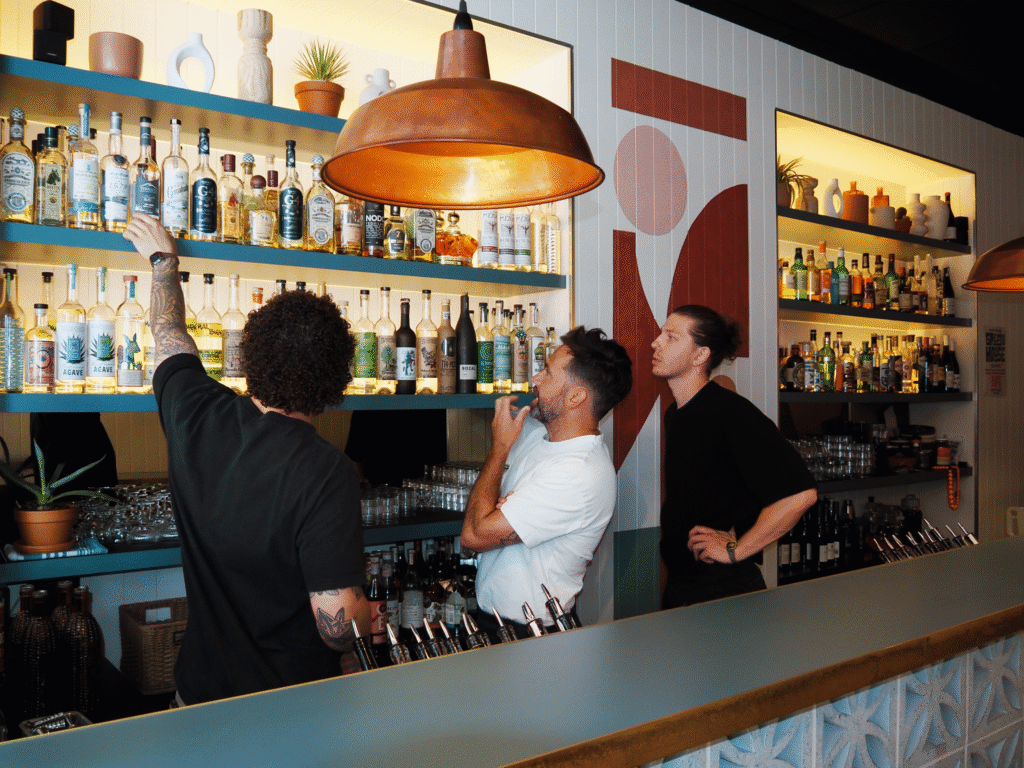
One year in, brothers Lachy and Matt Harrison have stripped bar ownership back to what actually matters. As the co-owners and operators of Bar Bar in Adelaide’s CBD, the pair built their 16-seater with a tight brief: agave-focused, intimate, and clear in its point of view. Twelve months on, the theory has been tested by real service, real customers, and the realities of running a small room where there’s nowhere to hide.
In this conversation, both Lachy and Matt reflect on what shifted once the doors opened – from obsessing over fit-out details to realising culture and systems drive the day-to-day. They talk about how their drinks list evolved under pressure, why “fruity yum yums” consistently outperform complex builds, the decision to lock in Agave Lux as their house pour, and how music, lighting and steady opening hours quietly turned the bar into a midweek reset spot for patrons. It’s a straight look at year one: what worked, what they’d tweak, and why repeat visits trump every other metric.
Looking back at your first year open, what’s the biggest thing you thought you understood about running a bar – and what actually played out differently once you were operating day to day?
Leading up to opening, we were convinced the small details would be make-or-break – stool placement, glassware, shelving. They do matter, but they found their rhythm pretty quickly once the doors opened.
What really shapes a bar day to day is less about where the stools sit, and more about the people and the systems behind it. The culture is what sticks, and ultimately what people remember us for.
How did your original drinks list evolve once you saw what guests were ordering, and how do you decide when a drink needs to be tweaked versus when it’s time to cut it entirely?
Writing a cocktail list without a bar to test it in was always going to be a challenge. Until you see how a drink behaves in real service, it’s all theory.
Once we opened, the list became a work in progress. We pay attention to what’s reordered and genuinely encourage honest feedback. The only drink we’ve ever retired was a fig leaf martini–not because people didn’t like it, but because we couldn’t deliver it exactly how we wanted to, every time.
If we’re not completely happy with how something performs on a busy night, it doesn’t stay.
Were there any surprise crowd favourites you didn’t expect to take off?
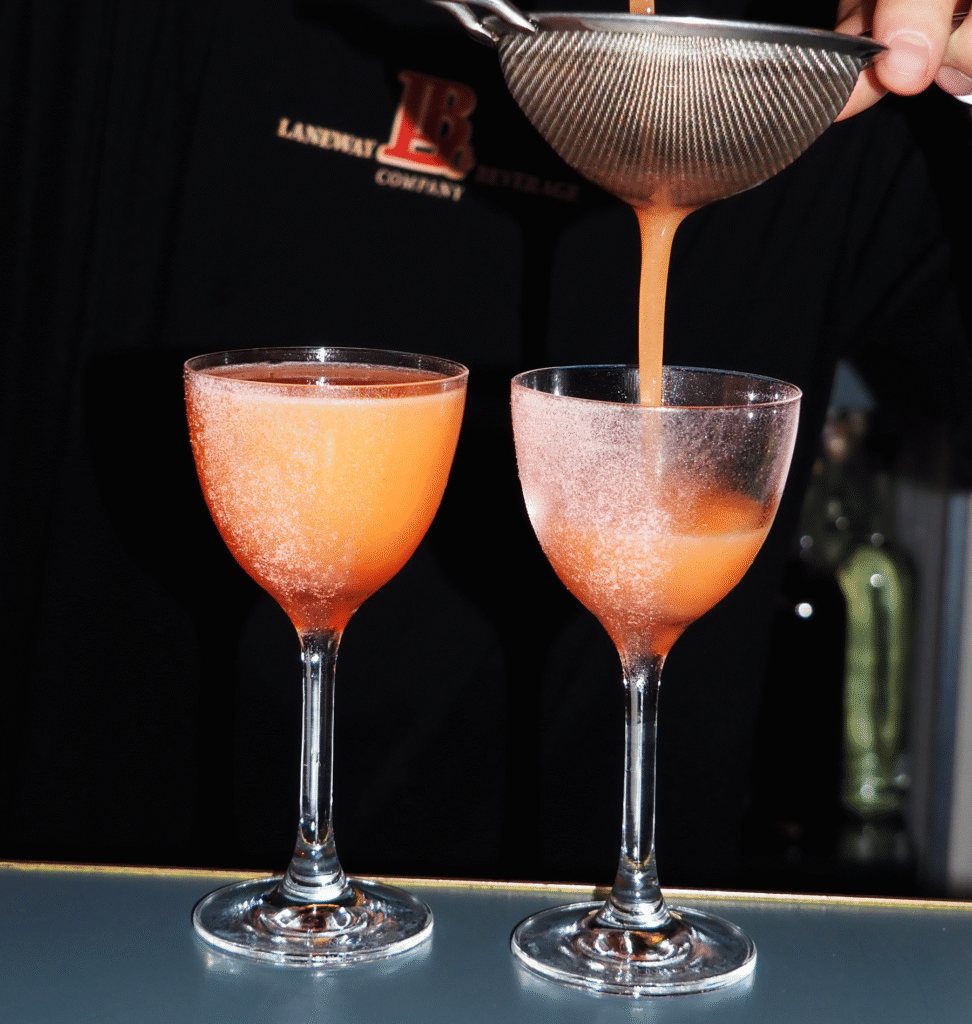
It’s almost always the simpler drinks. Clean, approachable, and familiar flavours – what Matt calls the “fruity yum yums”– consistently outperform the more complex builds. It’s a good reminder that drinkability always wins, and that a cocktail doesn’t need to prove anything to be good.
Have you had to adjust ingredients, specs, or price points over the year to balance creativity with consistency and margins?
Not in a major way. Locking in Agave Lux as our house-pour tequila from the start gave us a solid foundation. When your base is strong, you’re not constantly reworking specs or chasing your tail on pricing. It means we can get creative where it counts, without compromising consistency.
Atmosphere is everything in a bar. What changes have you made to music, lighting, or service style to better match how people actually use the space?
The first few months were all about feeling the space out, especially when it came to music. We wanted to avoid the usual agave-bar = Mexican soundtrack stereotype and naturally settled on rocksteady and roots reggae – the kind of stuff we actually listen to ourselves.
That soundtrack, paired with warm lighting and our relaxed-but-attentive service style, ended up shaping the room more than anything we consciously planned. Over time, we noticed people were using Bar Bar as a bit of a midweek reset spot, and now we’ve quietly become something of an oasis for office workers in the Adelaide CBD.
What’s one operational decision you made early on that saved you later — and one you’d redo if you had the chance?
Committing to being agave-focused from day one gave everything clarity – the drinks, the training, the way we talk about what we do. It kept us from trying to be everything to everyone.
Locking in consistent opening hours early on also helped us build a loyal, regular crowd. People know when we’re here.
If we could redo anything, it’d be spending a bit more time on the fit-out planning. But overall, we’re genuinely stoked with how it’s all come together.
Staffing-wise, what have you learned about building and retaining the right team in that crucial first year?
Running a 16-seater bar as owner-operators meant the shifts we could initially offer were limited. We wanted committed staff, but we couldn’t offer big hours straight away.
The shift came when we structured the roster more clearly and gave people consistency. Stability goes a long way. Once the team knew what they could rely on, everything else followed.
What metrics actually matter most to you now, sales mix, dwell time, repeat visits, speed of service – and how do they influence decisions behind the bar?
The one that matters most is simple: people coming back and bringing their friends.
If that’s happening, the rest tends to sort itself out. Sales mix and speed are important, but they’re outcomes. The real focus is whether people feel good in the space and want to return.
For operators about to open their first bar, what’s the one piece of advice you would give?
Have a clear brief. Stick to it. Back yourself.
You don’t need to explain every decision to everyone. If you’re confident in the concept and consistent in how you execute it, that confidence becomes part of the room.