
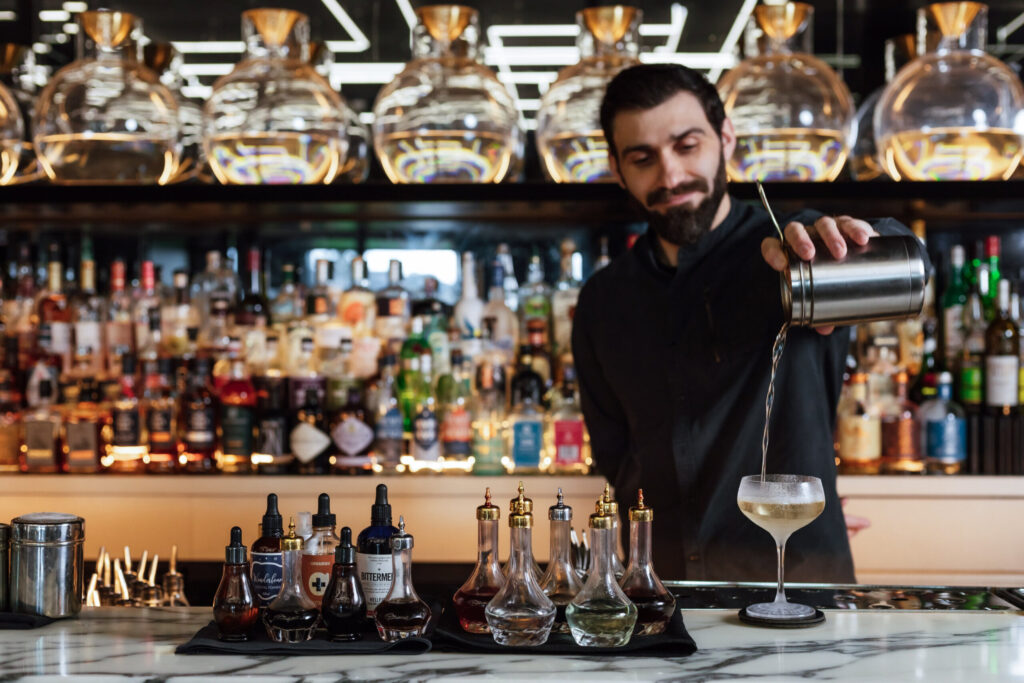
Tea and coffee are deeply entrenched in cultures all around the world. Tanguy Charbonnet, the 2025 Australian Bartender of the Year and Jackalope Hotels food and beverage director, looks at how they can be used in cocktails.
I often think back to my early years in bartending, working in hotel bars where tea and coffee were deeply tied to the rhythm of the day.
Mornings belonged to coffee serving early risers in need of energy while afternoons were shaped by the elegance of the traditional afternoon tea.
Tables were filled with porcelain teapots and delicate cups, surrounded by the remnants of petit fours, macarons, and friands.
These moments left a lasting impression. Today, tea and coffee continue to influence the drinks world, driven by the passion of baristas and the ever-evolving café culture.
Their presence in cocktails is far from new. As early as 1862, the pioneering bartender Jerry Thomas published How to Mix Drinks, where we find some of the earliest punch recipes blends of tea, spirits, sugar, citrus, and spices.
Both tea and coffee contribute structure, balance, and complexity to cocktails. Tea brings tannins, floral aromatics, and subtle bitterness, while coffee delivers intensity, roasted depth, and a more pronounced bitter profile.
Like many aspects of the drinks world, their use moves in cycles.
Today, we are witnessing a renewed interest in both, as bartenders rediscover and refine their place in modern bars.
Understanding a cocktail’s structure
Before exploring specific drinks, it is helpful to understand how a cocktail is built. A cocktail can be visualised as a pyramid composed of three key elements:
1. The base (structure)
At the foundation is the structure of the drink traditionally a spirit which provides body and defines its character. In contemporary approaches, this role can also be fulfilled or complemented by tea or even coffee, offering new layers of complexity.
2. The sour or bitter element
The second component introduces freshness and balance, typically through acidity such as citrus. In some cases, bitterness replaces or complements acidity. A classic example is the old fashioned, where bitterness plays a central role instead of sourness.
This is where tea and coffee become particularly compelling. Tea contributes structure through its tannins, bringing controlled bitterness and aromatic complexity, while coffee can act as a structural modifier, reinforcing bitterness and depth within the drink.
3. The sweet element
Finally, sweetness rounds out the drink. This can come from syrups, liqueurs, or naturally occurring sugars within ingredients. When these three elements are in harmony, the result is a well-balanced cocktail.
Together, tea and coffee allow us to rethink this classic framework not simply as a balance between sweet and sour, but as a more nuanced interplay of sweetness, acidity, and controlled bitterness.
“Both tea and coffee contribute structure, balance, and complexity to cocktails. Tea brings tannins, floral aromatics and subtle bitterness, while coffee delivers intensity, roasted depth, and a more pronounced bitter profile.”
Three contemporarytea-based creations
1. A floral tea fizz
The first drink is a refined fizz. It begins with peach kernels, roasted in a wood-fired oven for ten minutes, then infused in coconut water for two weeks. This infusion is transformed into a syrup with sugar.
To this base, an apple cordial is added alongside a low-ABV sake, which contributes a subtle saline character.
The drink is finished with Buddha’s Tears tea from T2, a beautifully floral jasmine tea, cold brewed to preserve its delicate aromatics. The final cocktail is fully carbonated, allowing the elements to integrate seamlessly and creating a harmonious balance.
2. A clarified jasmine tea & gin cocktail
Jasmine tea is infused into a floral gin Hendrick’s Gin works particularly well here due to its distinctive notes of rose and cucumber, which complement the tea’s natural aromatics. As the tea infuses, its tannins gently colour the gin while adding structure and a subtle bitterness.
To this infusion, a homemade lime cordial is added for brightness and balance. The mixture is then clarified using milk, resulting in a crystal-clear, luminous drink with a silky texture.
This clarification process softens the acidity, rounds out the tannins, and enhances the delicate floral profile, creating an elegant and well-balanced cocktail.
3. A shaken tea cocktail
The final drink is shaken, showcasing a cold brew of Phoenix Honey tea from T2.
This is paired with pear juice, a salted caramel coconut water syrup, and fresh lime juice. Shaking aerates the drink, enhancing its aromatics and building structure.
The tea’s profile works beautifully alongside the richness of salted caramel and the freshness of coconut.
Coffee in cocktail culture
Coffee holds an equally important place in contemporary bar culture. In a city like Melbourne, where coffee culture is famously strong, its influence naturally extends into cocktail creation.
Coffee can be understood as a powerful bitter element, bringing intensity, depth, and roasted complexity to drinks.
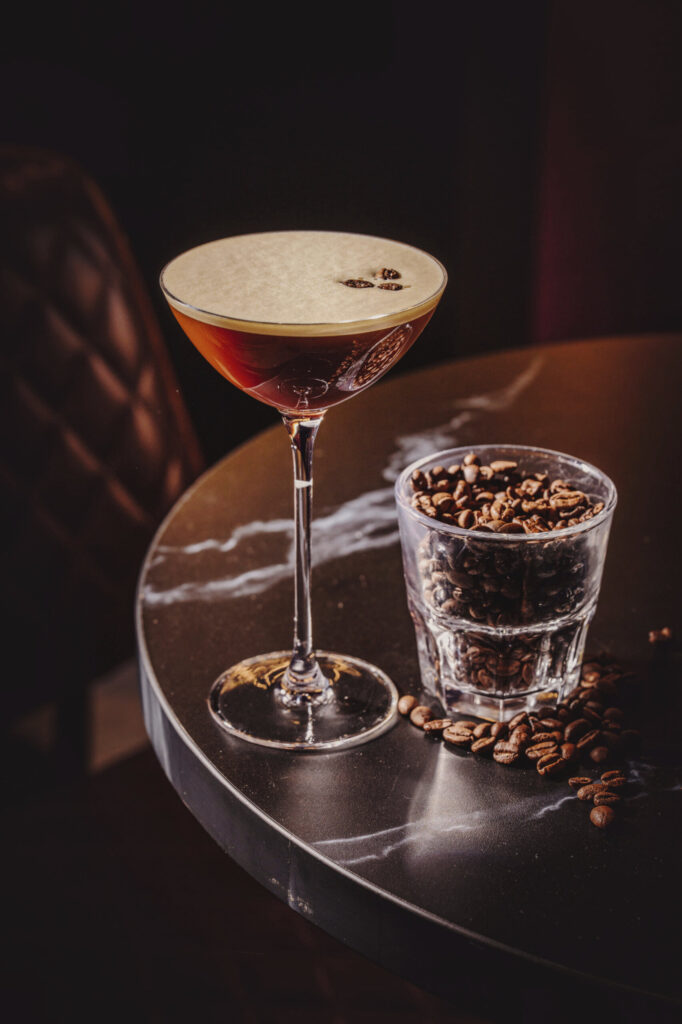
When thinking about coffee in cocktails, many immediately think of the espresso martini a modern classic created in London in the 1980s by Dick Bradsell, originally designed to “wake up” the drinker while still delivering the effect of alcohol.
Another timeless example is Irish coffee, created by Joe Sheridan in the early 1940s (around 1943), combining coffee, whiskey, sugar, and cream into a warm and comforting drink.
Australia’s strong coffee roasting culture has also led to the creation of distinctive products such as Red Mill White Bay Series Coffee Rum, reflecting both craftsmanship and regional identity.
Among contemporary creations, one standout is the Café Frappé, developed by Felix Wood at La Reine La Rue.
This refreshing and complex cocktail combines coffee, vodka, amaro, and crème de menthe, resulting in a drink that is bitter, vibrant, and particularly intriguing.
Sustainability behind the bar
In a more sustainable approach to bartending, citrus waste, such as leftover peels from lemons, limes, and oranges can be repurposed rather than discarded.
By covering these peels with sugar and allowing them to rest overnight, bartenders can extract a rich, aromatic syrup known as oleo saccharum.
Once strained, this syrup can be combined with lime juice and a cold brew of French Earl Grey tea to create a bright, layered, and sustainable cocktail component.
Tea and coffee are more than just ingredients they are tools of structure, balance, and creativity.
Together, they allow bartenders to push the boundaries of flavour, redefining how we experience both alcoholic and non-alcoholic drinks. 