
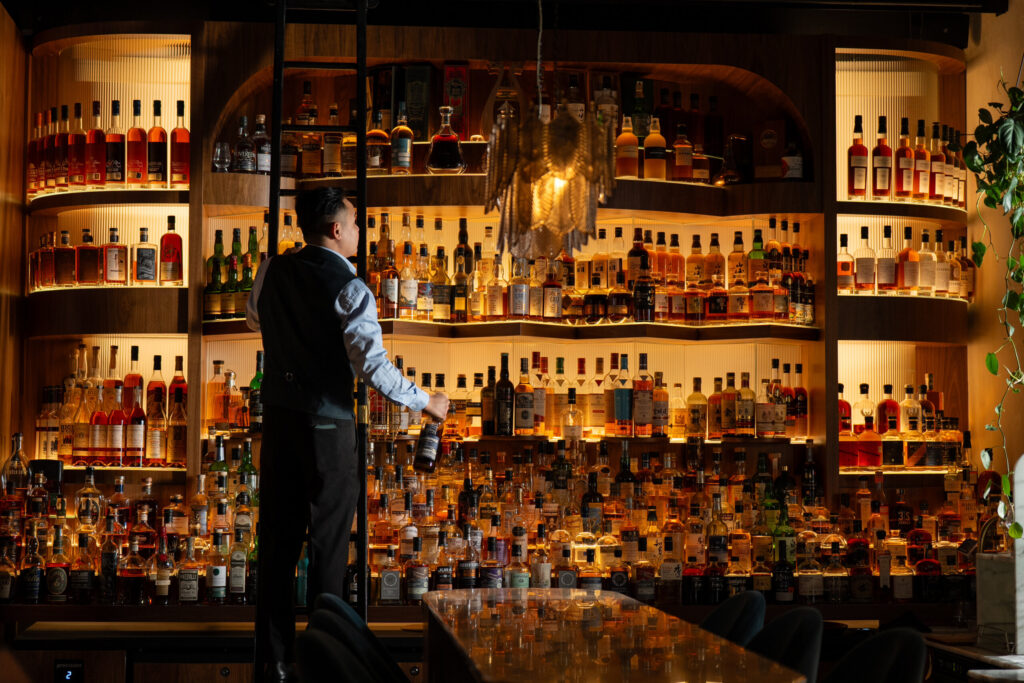
Owner of Adelaide’s Ralph Louis Frederick and Hains & Co, Marcus Motteram, reflects on his whisky situationship – from bravado and dislike to curiosity and appreciation.
If you’d told 18-year-old me that one day I’d run a luxury whisky bar, I’d have laughed you out of the room – probably while nursing a hangover from a bottle of Teacher’s Scotch.
My relationship with whisky started badly. Like many rookies, my first experience wasn’t about nuance, terroir or cask influence. It was about bravado. A rough introduction to Scotch at 18 left me convinced whisky simply wasn’t for me. I wrote it off as harsh, medicinal and entirely unnecessary when rum and gin existed.
Fast forward to 2003. I’d just been voted ALIA Bartender of the Year and felt like a complete imposter. How could I accept that accolade when I didn’t even like whisky – arguably one of the most important spirits in our craft? At the time I was working at Chaise Lounge, a basement cocktail bar on Little Collins Street in Melbourne. Vodka dominated the back bar – we had 30 variants – while whisky occupied a small but serious corner.
The “in-the-know” guests ordered Lagavulin or Laphroaig. So one night, determined to educate myself, I poured a dram of Laphroaig 10 Year Old into a wine glass and spent 30 minutes dissecting it. I found sea air, peat smoke, iodine, bandages, hospital corridors. My honest thought? Who in their right mind drinks this stuff?
But here’s the lesson for rookie bartenders: don’t let your first impression be your final word.
Training your palate (even when you don’t like it)
Whisky appreciation isn’t about forcing yourself to enjoy something immediately. It’s about curiosity.
When peat felt like too much, I changed tack. I started with a Rusty Nail – Chivas Regal and Drambuie – and slowly reduced the sweetness over time. Before long, I was drinking Chivas straight. From there, I moved into Speyside territory with Glenfiddich 12. Softer fruit, malt sweetness, and a gentler profile.
I wasn’t in love yet, but I understood more. And understanding breeds appreciation. For young bartenders wanting to grow:
1. Start where you are, not where you think you should be
If Islay peat feels like a bonfire in your mouth, don’t force it. Try a lighter Speyside or an Irish whiskey. Ease your way in.
2. Change the format
Neat isn’t the only way. Add a few drops of water. Try it over ice. Build a classic like an Old Fashioned to understand how structure works.
3. Taste slowly and with purpose
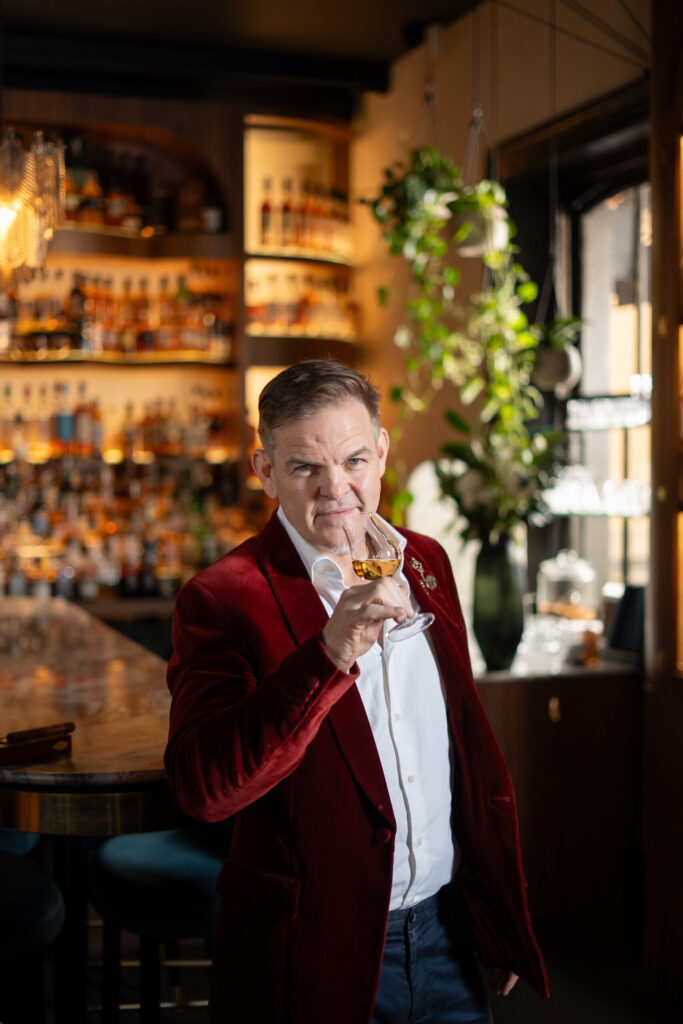
Use a tulip or wine glass. Nose gently. Keep your mouth slightly open as you smell, so the nostrils don’t burn like hell.
Take a small sip and let it coat your palate. Notice texture – is it oily? Dry? Creamy? Then search for flavours: fruit, spice, smoke, cereal, chocolate. There’s no wrong answer – only your perception.
“For rookies, taste side by side. Compare a Speyside Scotch with an Australian single malt, try a Kentucky bourbon next to a Japanese whisky. Context builds understanding.”
The Old Fashioned epiphany
Years later, when I co-owned the Melbourne bar Ffour, I was introduced properly to the Old Fashioned. Around the same time, I secured a deal on Blanton’s Special Reserve Bourbon.
That bourbon changed everything.
The caramel, vanilla and spice from new American oak – balanced with bitters and a touch of sugar – showed me whisky in context. It wasn’t about bravado. It was about balance. Structure. Texture.
If you want to understand whisky as a bartender, classics are your classroom – an Old Fashioned shows you base spirit integrity, a Manhattan teaches harmony between whisky and fortified wine, and a Highball demonstrates how dilution and carbonation can elevate, not diminish.
Old World vs New World
As my knowledge grew, so did my curiosity about where whisky comes from.
Old World whisky – think Scotland and Ireland – is typically rooted in tradition. Scotch must be aged in oak for a minimum of three years and is often matured in ex-bourbon or sherry casks. Regional styles matter: Islay’s peat, Speyside’s fruit, the Highlands’ breadth.
New World whisky – Australia, Japan (arguably both traditional and modern), the US craft scene — often pushes boundaries. Different grains, experimental casks, climate-driven maturation. Australian whisky, for example, matures rapidly due to our heat, leading to bold oak influence in younger spirits.
Neither is “better”. They simply tell different stories.
For rookies, taste side by side. Compare a Speyside Scotch with an Australian single malt, try a Kentucky bourbon next to a Japanese whisky. Context builds understanding.
Falling in love (properly)
When I opened Hains & Co in Adelaide, whisky still wasn’t the centrepiece. That changed when Cody Deatker joined the team. He introduced me deeply to Japanese whisky – precision, elegance, balance. In return, I shared my love of rum.
We began curating our back bar differently. Instead of simply restocking what sold, we sought independent bottlings, higher ABVs, different peat levels, different countries. We wanted breadth. We wanted conversation.
As staff knowledge grew, so did guest interest. Whisky stopped being intimidating and became inviting.
We visited some of Australia’s great whisky bars – Whisky & Alement, Elysian, Eau de Vie – and saw what was possible when passion meets curation. That was the seed for building Ralph Louis Frederick, our upstairs whisky bar in Adelaide.
The process took seven years. Heritage overlays. Council negotiations. Redesigns. A balcony saga that nearly broke my spirit. But through those years, we kept tasting. Judging spirit competitions. Expanding our palates. Collecting bottles with intent.
When Ralph Louis Frederick finally opened, it wasn’t just a bar. It was the physical manifestation of a relationship that had taken decades to mature.
What I love about whisky now
Whisky is patience in a bottle. It’s geography. It’s time. It’s wood and climate and craft.
But more than that, it’s a reminder that your palate evolves.
I didn’t fall in love overnight. I trained for it. I stayed curious. I let go of ego. And somewhere between a Rusty Nail and a cask-strength bourbon, something shifted.
To every rookie bartender reading this: you don’t have to love every spirit immediately. But you owe it to yourself – and to your craft – to understand it.
Your first sip doesn’t define you.
Your willingness to learn does. 