
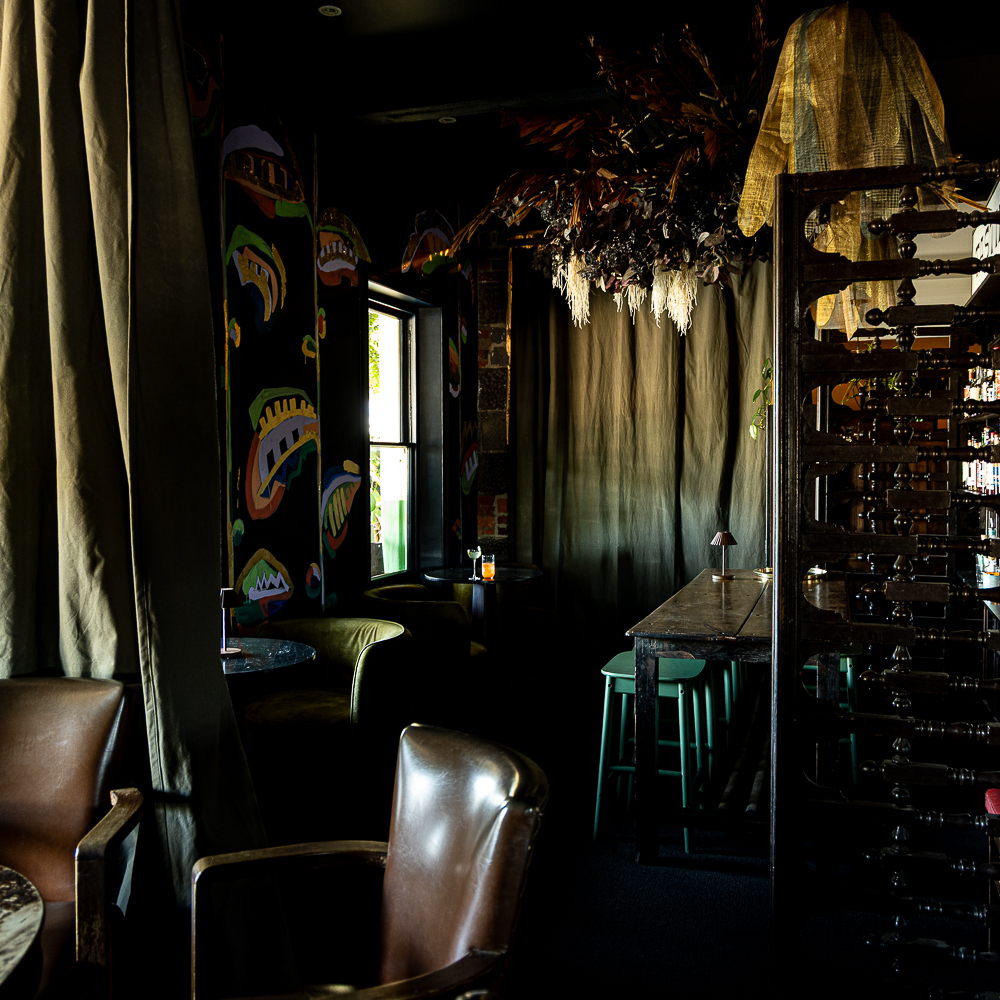
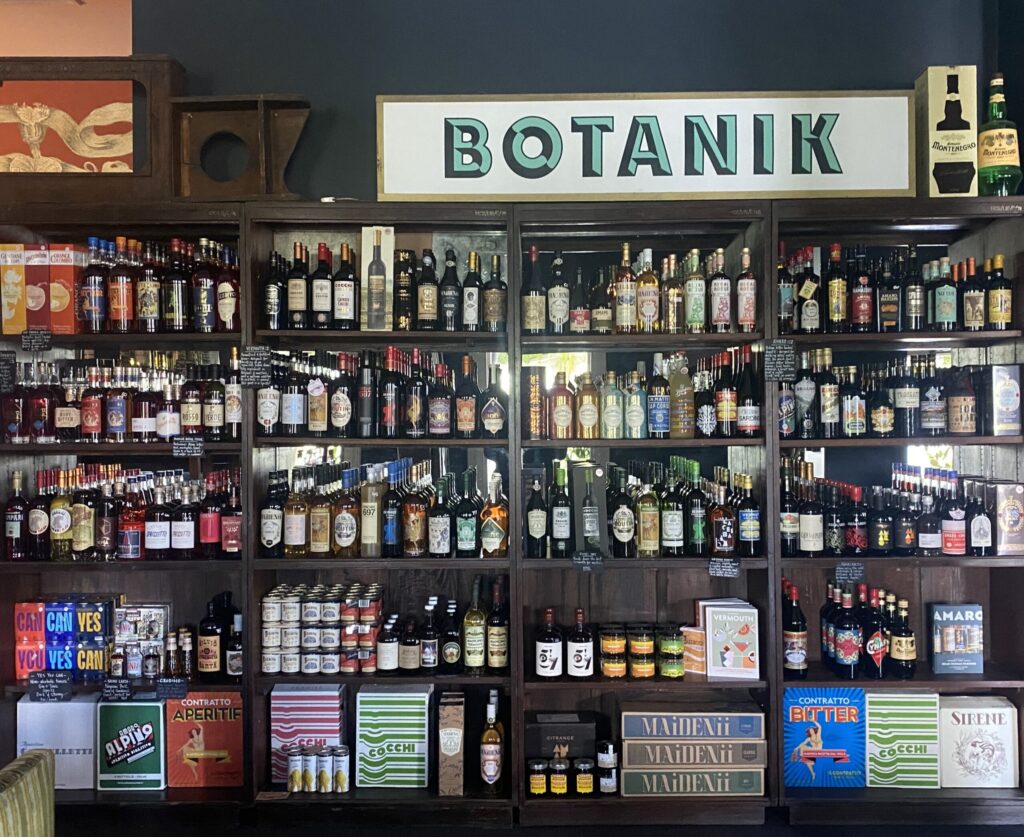
Up a staircase in Kyneton, Victoria, and inside the old Royal George Hotel – sits Botanik, a small, quietly obsessive world built for people who like their drinks with depth, and history. What began as a bottle shop devoted to amaro, vermouth and other botanically driven spirits has evolved into one of Australia’s most distinctive drinking rooms, home to one of the country’s largest Amari collections and a bar that treats bitterness like an art form.
I spoke with owner Melissa Macfarlane to unpack the curiosity that sparked Botanik, the hunt behind its 150-plus bottles, and why amaro is suddenly everywhere.
When Melissa Macfarlane looks back at how Botanik began, she traces it straight to the stillness of the COVID lockdowns. “It started when I finally had the space to think about reinvention,” she says. “I’ve always been driven by discovery – travelling, tasting unusual liquors in unexpected places, chasing anything I’ve never heard of simply because it sparks my curiosity.”
Vermouth was the first deep dive, and everything grew from there. “The botanicals, the history, the sheer diversity – that was the rabbit hole. From there the fascination widened into all aromatised and bitter spirits,” she explains. And when the industry reopened, the timing clicked. “After lockdowns, people were hungry for real experiences again, and amaro offered that sense of story and mystery. And of course, the labels are wonderfully alluring.”
Interestingly, the bar wasn’t born from trying to fill a market gap. “Curiosity was the motivation, not the gap,” she says. “I kept wondering where someone would go if they were genuinely interested in amaro and aromatised spirits. There wasn’t a dedicated space for that kind of exploration.” When she realised no such venue existed, the path forward became obvious. “It became clear Botanik could fill that void for people who wanted to taste, learn and discover in a meaningful way.”
Curating what’s now Australia’s largest collection of amari is an ongoing hustle. “Quality is always the starting point,” she says, “but we also embrace the strange, the difficult and the beautifully eccentric bottles because they complete the story of amaro.” Anything that looks like it’s survived untouched since the 1960s is an instant magnet. “If a label looks like it hasn’t changed in 60 years, we’re instantly drawn to it – those bottles carry history in their bones.”
Sourcing is its own adventure. “Availability shifts constantly,” she says. “Many importers don’t list everything publicly – some products are effectively hand-sold to people who genuinely care.” That means constant research, weekly deep dives, and the occasional chase. “The hunt is part of the pleasure.”
Ask her why amaro is having a moment and she doesn’t hesitate. “Amaro is versatile, flavourful and full of character,” she says. “It works in cocktails but also drinks like a cocktail on its own – complex, layered and satisfying.” She also sees it resonating with people who find wine a minefield. “For many, it feels more approachable than wine, especially if wine language feels intimidating. Its bitterness, funkiness and herbal depth give it an immediate personality.”
There’s also a shift in how drinkers think. “People want to understand what they’re drinking,” she adds. “Amaro’s moderate ABV, its digestive qualities and the simple fact that it’s delicious all contribute to its moment.”
Introducing newcomers to the category is one of her favourite parts of the job. “I always start with something familiar,” she says. “A rabarbaro-style amaro makes sense when you explain it like an after-dinner PX sherry. Our citrus amaro from Mount Etna can replace limoncello.” But the real magic happens in the glass. “Amaro is too varied to explain theoretically; bitterness preferences differ wildly, so it’s easier to show than tell. Everyone who walks into the bottle shop is offered a sample from any of the 150 bottles.” Even the richer styles get comparisons. “Sometimes I’ll describe a heavier amaro as an earthy, smoky port – but tasting always leads the way.”
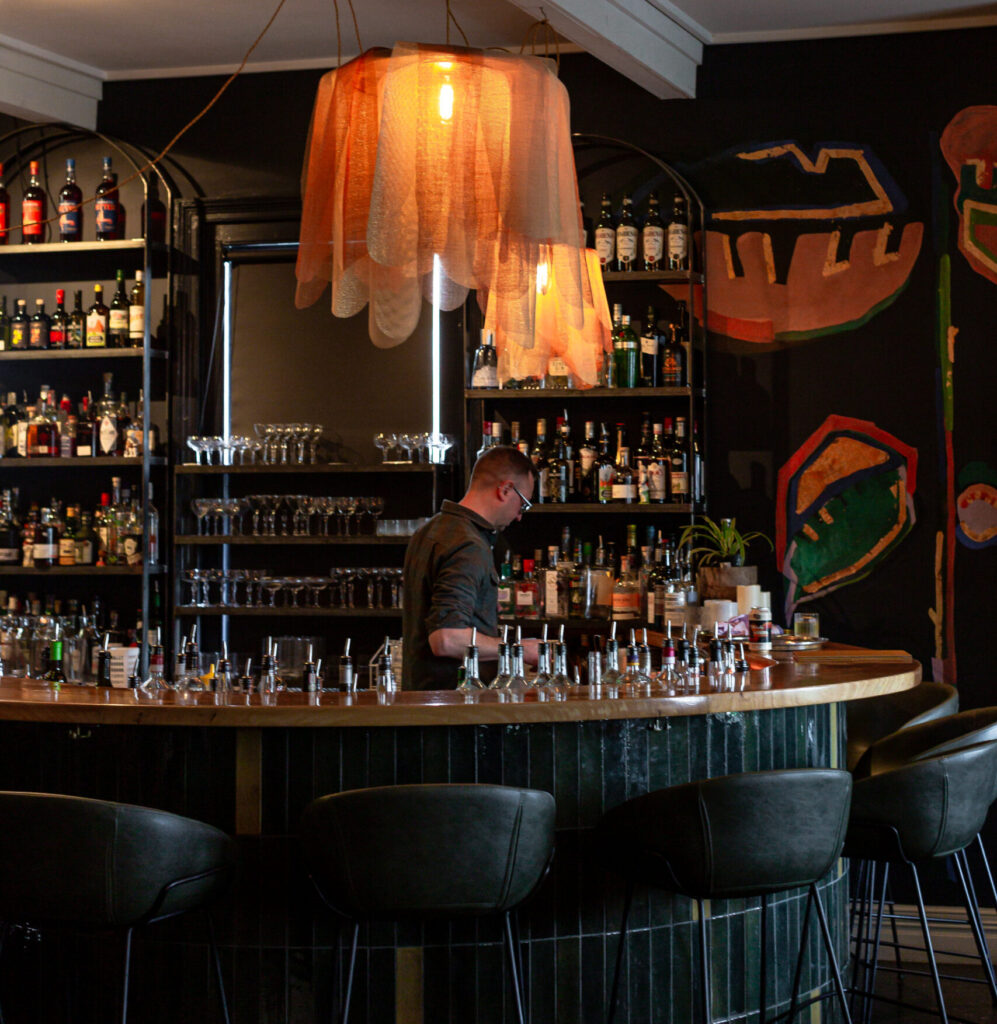
Botanik’s hybrid model – part bar, part bottle shop, plus tasting room and workshops, shapes how people experience the space. “We began as a bottle shop and then added the bar,” she says. “We’re product-first – the bar exists to support the bottle shop, not the other way around.” It creates room for exploration. “Guests can wander, pick things up, ask questions, taste, compare. People love being able to chat, learn and physically explore the products.” With glassware, books, and cocktail equipment also on the shelves, “it becomes a little world of its own where you just happen to be able to enjoy a drink.”
And the future? Macfarlane is already thinking ahead. “Next year we’re looking toward producing our own vermouth and amaro,” she reveals. They’re also expanding into more aperitivo and aromatised wines. “We’re developing an amaro glass – something purpose-built for the category.” And there’s one more idea brewing that feels very on-brand: “We’re considering a tour through Italy and Spain, chasing producers, traditions and inspiration for what Botanik might become next.”
For Macfarlane, the thread running through all of it is curiosity. The bottles, the stories, the chase – that’s what keeps Botanik moving. The rest grows naturally from there.